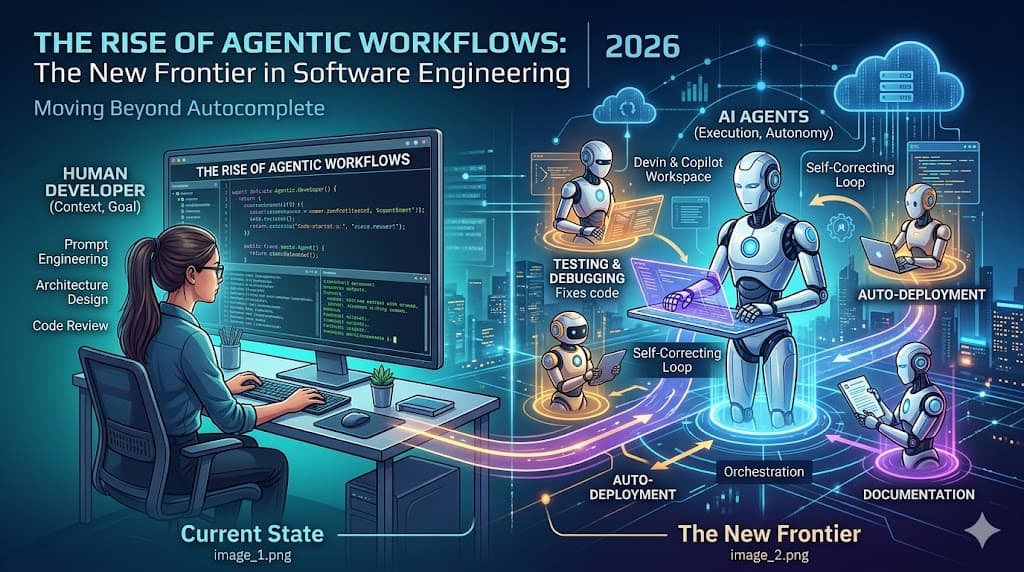
The Rise of Agentic Workflows: The New Frontier in Software Engineering
Explore the shift in support from simple coding to automated AI Agent support in program implementation—a trend that will redefine how engineers build software in 2026.
The Rise of Agentic Workflows: Moving Beyond "Autocomplete"
In the past few years, the conversation around AI in programming has shifted dramatically. We have moved from simple code completion (LLMs acting as advanced "autocompletes") to Agentic Workflows—where AI systems act as autonomous collaborators capable of planning, executing, and debugging complex tasks.
1. What are Agentic Workflows?
Unlike traditional AI chat interfaces, an agentic workflow doesn't just give a one-shot answer. It operates in a loop:
- Planning: Breaking a prompt into sub-tasks.
- Tool Use: Accessing a terminal, browser, or IDE.
- Reasoning: Evaluating whether the generated code actually solves the problem.
- Self-Correction: If a test fails, the agent reads the error log and fixes itself.
2. Key Players and Tools
The landscape is no longer just about ChatGPT. Several tools are defining this "AI-First" era:
- GitHub Copilot Workspace: Allows developers to go from a GitHub Issue to a pull request with a plan-driven approach.
- Devin & OpenDevin: "AI software engineers" that can learn new technologies and build entire apps autonomously.
- Cursor: An AI-native code editor that has gained massive traction by deeply integrating LLMs into the filesystem context.
3. The Shift in Developer Skills
As AI takes over the "boilerplate" and syntax-heavy tasks, the role of a human programmer is evolving:
| Old Focus | New Focus (2025-2026) |
|---|---|
| Writing Syntax | System Architecture |
| Manual Debugging | Reviewing AI-generated Logic |
| Memorizing APIs | Prompt Engineering & Context Management |
| Unit Testing | AI Orchestration & Security Oversight |
4. Why It Matters
This shift is significantly lowering the barrier to entry for building complex systems. A single "10x Developer" is now becoming a "100x Architect" by managing a fleet of AI agents to handle documentation, testing, and deployment.
Key Takeaway: The goal isn't to replace the developer, but to automate the "drudgery" so humans can focus on solving high-level business problems and creative innovation.
Conclusion
We are entering an era where "Coding" is becoming "Orchestrating." If you aren't experimenting with agentic tools yet, now is the time to start. The future of programming isn't just about writing lines of code; it's about managing the intelligence that writes them for you.
Related
Resources
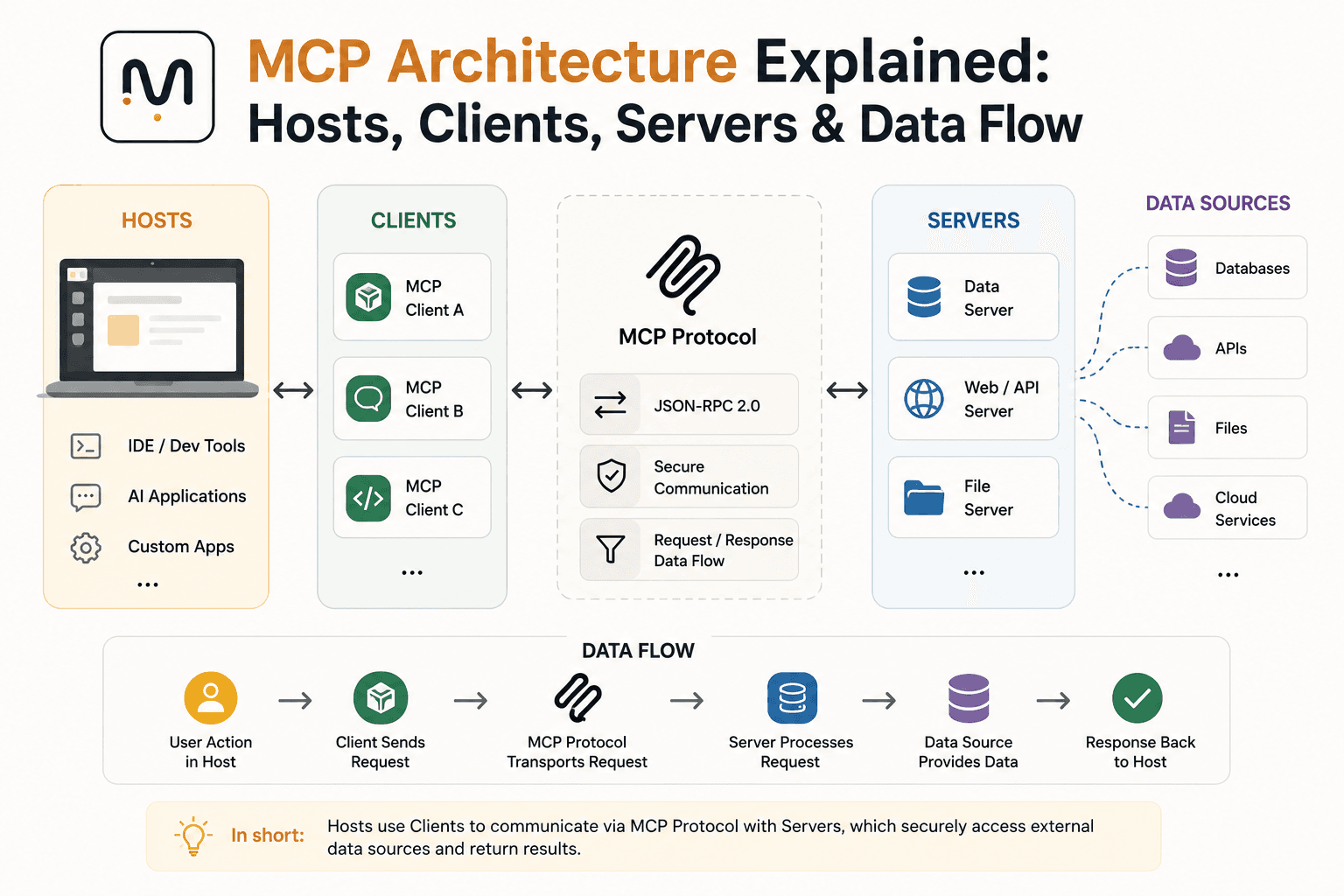
MCP Architecture Explained: Hosts, Clients, Servers & Data Flow
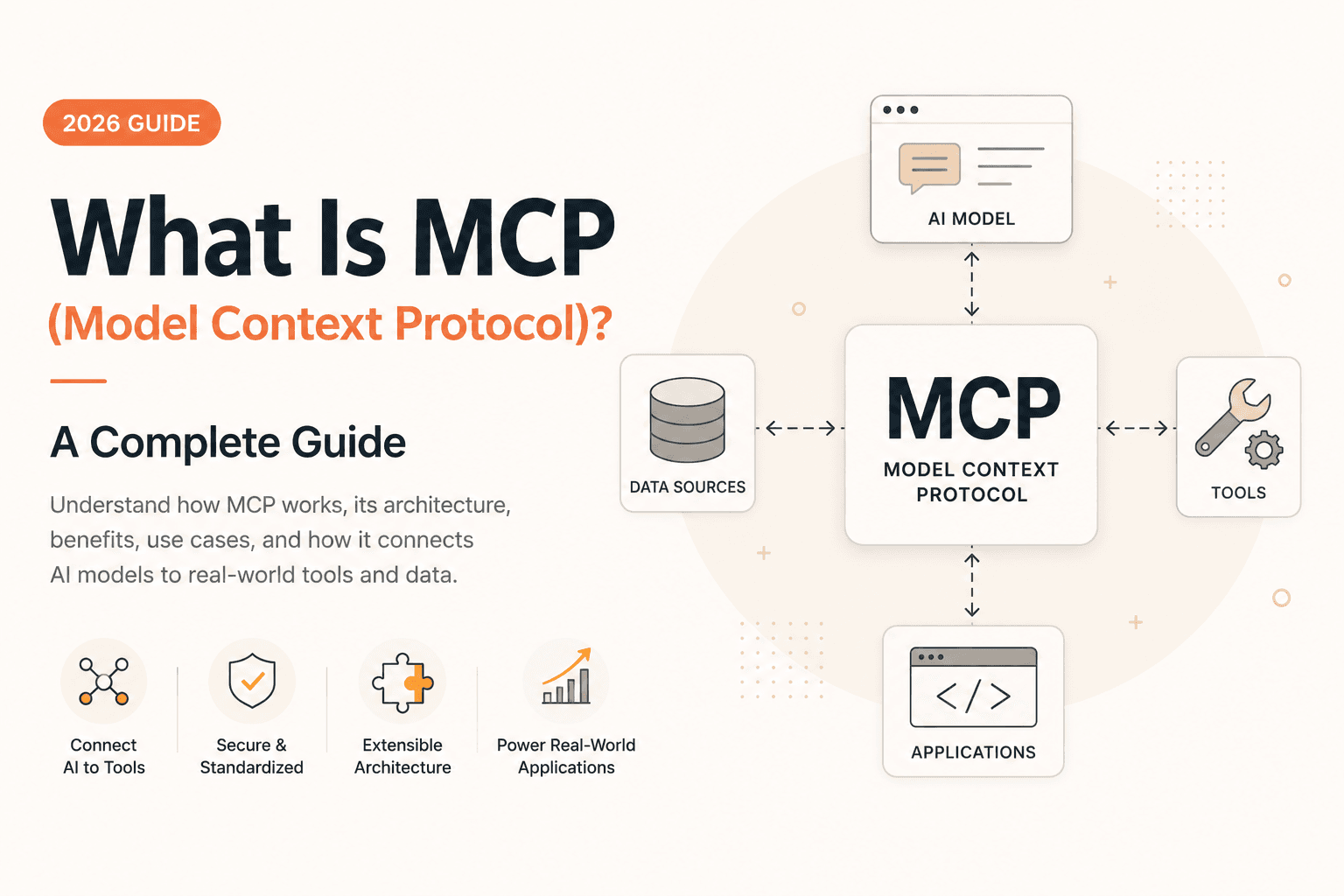
What Is MCP (Model Context Protocol)? A Complete Guide (2026)

OpenRouter API Tutorial: How to Connect & Fetch LLM Responses (JS/Node.js)
The Best AI Tools for Developers in 2026