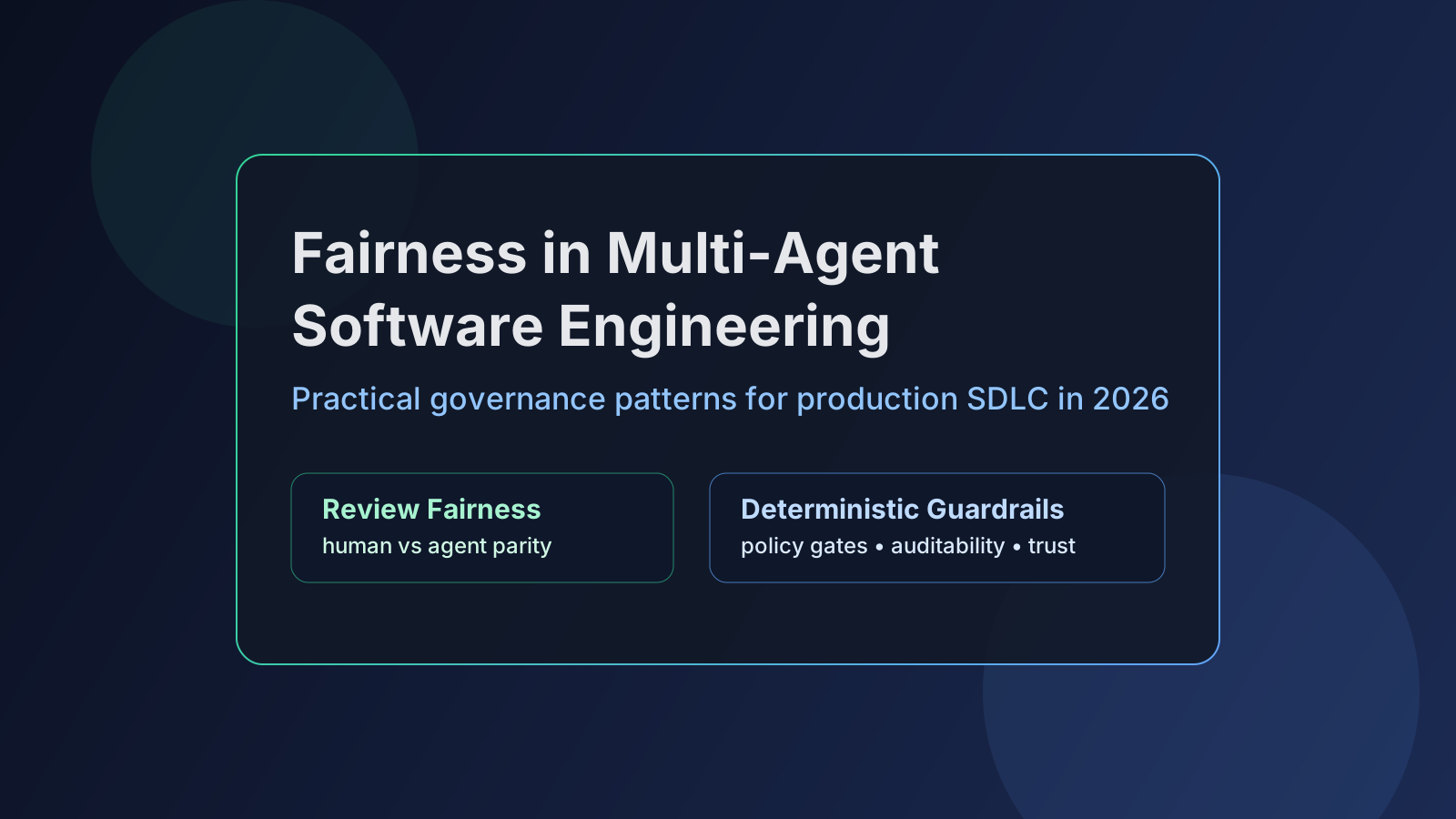
Fairness in Multi-Agent Software Engineering: What Teams Need in 2026
A practical 2026 playbook for measuring and governing fairness in multi-agent SDLC workflows, from task routing and AI code review parity to policy guardrails and release accountability.
Fairness in Multi-Agent Software Engineering: What High-Performance Teams Must Operationalize in 2026
Multi-agent software delivery is no longer a prototype workflow. In 2026, many teams run structured agent pipelines for planning, implementation, testing, review, and release orchestration. That shift increases throughput—but it also introduces a new class of engineering risk: system-level unfairness across the SDLC.
This article is intentionally practical. Instead of generic AI ethics discussion, it focuses on concrete failure modes, measurable fairness metrics, and governance controls that engineering leaders can implement in production.
Why fairness is now a core engineering property
In multi-agent development, unfairness is not just a social concern. It directly impacts delivery quality, incident risk, and team trust.
Three examples seen in real delivery pipelines:
- Assignment skew: agents repeatedly select low-risk modules, leaving hard services under-maintained.
- Review skew: code proposed by one “trusted” agent gets merged faster than equivalent code from another agent or from junior engineers.
- Evaluation skew: benchmark suites over-represent one stack pattern, causing platform decisions to optimize for the wrong constraints.
If these signals are left unmeasured, teams can ship quickly while silently accumulating architecture debt and governance debt.
What recent research signals for SDLC teams
The arXiv rapid review on fairness in multi-agent systems for software engineering highlights a key gap: teams are adopting agentic workflows faster than they are standardizing fairness evaluation across SDLC phases.
The practical implication is clear:
- Fairness cannot be validated only at code-generation time.
- Emergent bias appears in agent interaction loops (planner → coder → reviewer), not only in a single model output.
- Without traceability from task intake to release decision, fairness incidents are difficult to root-cause.
Where unfairness appears in a real agentic pipeline
1) Backlog triage and task routing
When task routers are reward-optimized for speed, they tend to avoid ambiguous tickets. Result: critical-but-messy domains (permissions, billing edge cases, migration work) receive less iteration.
Control: enforce module-level routing quotas and track assignment entropy per sprint.
2) Implementation and patch generation
Specialized coder agents often learn “safe template behavior,” which can overfit toward familiar code paths and under-serve minority architectures in the same monorepo.
Control: require diversity sampling for patch strategies on high-impact services.
3) Review and merge decisions
Review agents can inherit historical preferences and over-approve patterns associated with previously successful flows.
Control: blind selected review metadata and compare approval parity between sources (human senior, human junior, agent-A, agent-B).
4) Release and incident response
Post-merge signal quality is frequently aggregated at repo level, hiding uneven regression concentration in less-represented domains.
Control: evaluate fairness at service-tier granularity (critical APIs, internal tools, background jobs).
A concrete fairness scorecard for engineering managers
Use a monthly fairness scorecard with thresholds and escalation paths.
Assignment Fairness
- Task distribution by module, team, and risk class
- Ratio of deferred complex tickets vs straightforward tickets
- Agent routing concentration index
Review Fairness
- Accept/reject rate by PR source (human vs specific agent)
- Median time-to-review by source and severity
- Override frequency (human reversal of agent recommendation)
Quality Fairness
- Regression density by module and ownership type
- Security finding rate by source and code criticality
- Escaped defect rate by workflow path
Outcome Fairness
- Lead time variance across module classes
- Change failure rate across human-heavy vs agent-heavy paths
- MTTR parity for incidents introduced by different delivery paths
Governance patterns that actually work
Deterministic guardrails before autonomy
For sensitive zones (auth, billing, data access policy), enforce static policy gates that no agent can bypass. Generated patches may be proposed automatically, but release authority remains policy-constrained.
Provenance-first SDLC
Every change should preserve a machine-readable trail:
- who proposed,
- who transformed,
- who approved,
- which policy checks passed,
- why merge was allowed.
Without provenance, fairness cannot be audited and accountability collapses under incident pressure.
Human-in-the-loop by risk, not by habit
Do not require equal human review for every PR. Instead, attach human review depth to risk class (blast radius, compliance impact, data sensitivity). This protects velocity while preserving governance integrity.
Strategic takeaway for 2026
The competitive advantage is no longer “using AI agents.” It is operating trustworthy multi-agent engineering systems that remain fast under scale, transparent under audit, and resilient under failure.
Teams that treat fairness as a first-class SDLC property—like reliability, security, and performance—will ship faster and safer than teams optimizing only for throughput.
References
- Fairness in Multi-Agent Systems for Software Engineering: An SDLC-Oriented Rapid Review — https://arxiv.org/abs/2604.13103
- 2026 Agentic Coding Trends Report — https://resources.anthropic.com/2026-agentic-coding-trends-report
Related
Resources
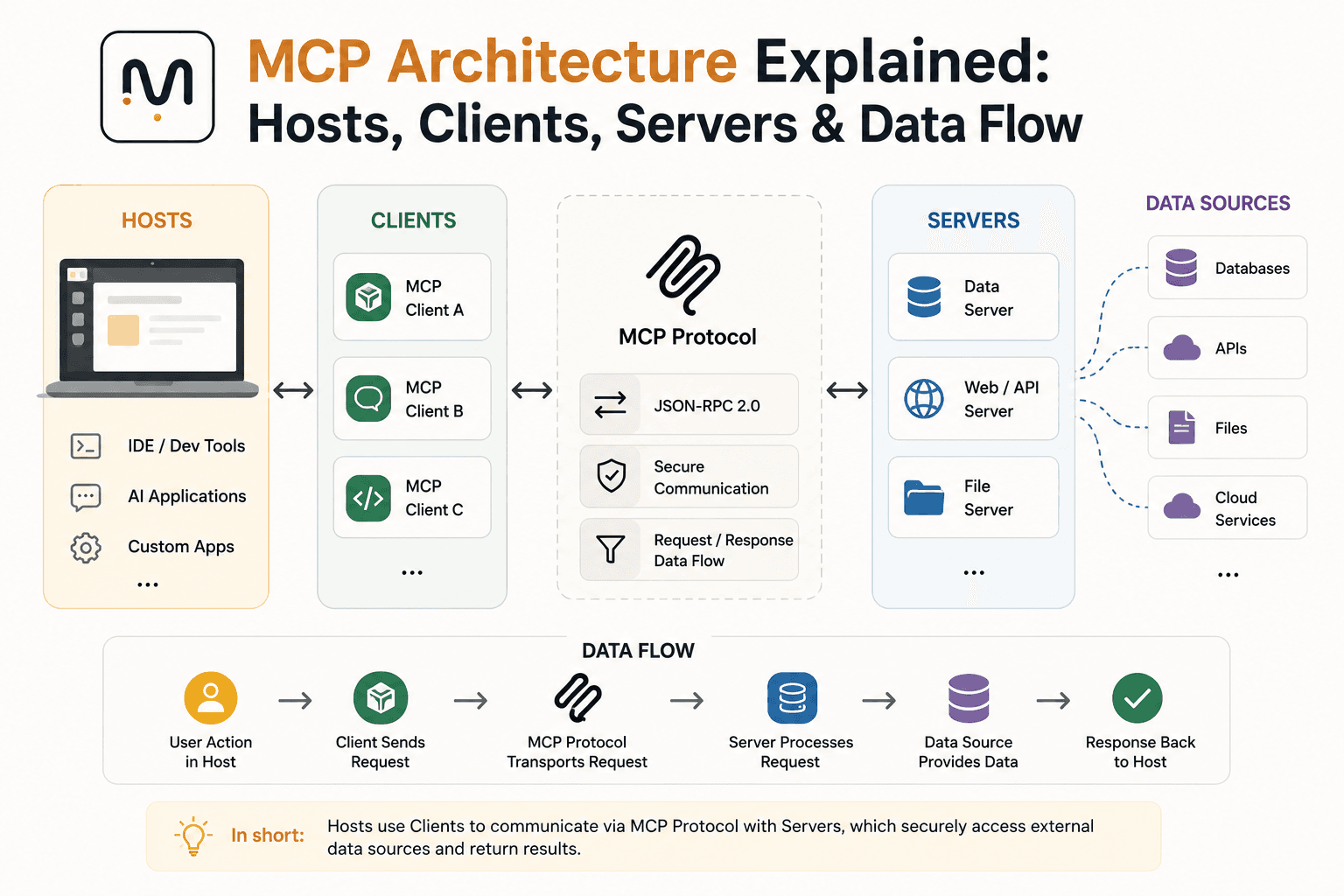
MCP Architecture Explained: Hosts, Clients, Servers & Data Flow
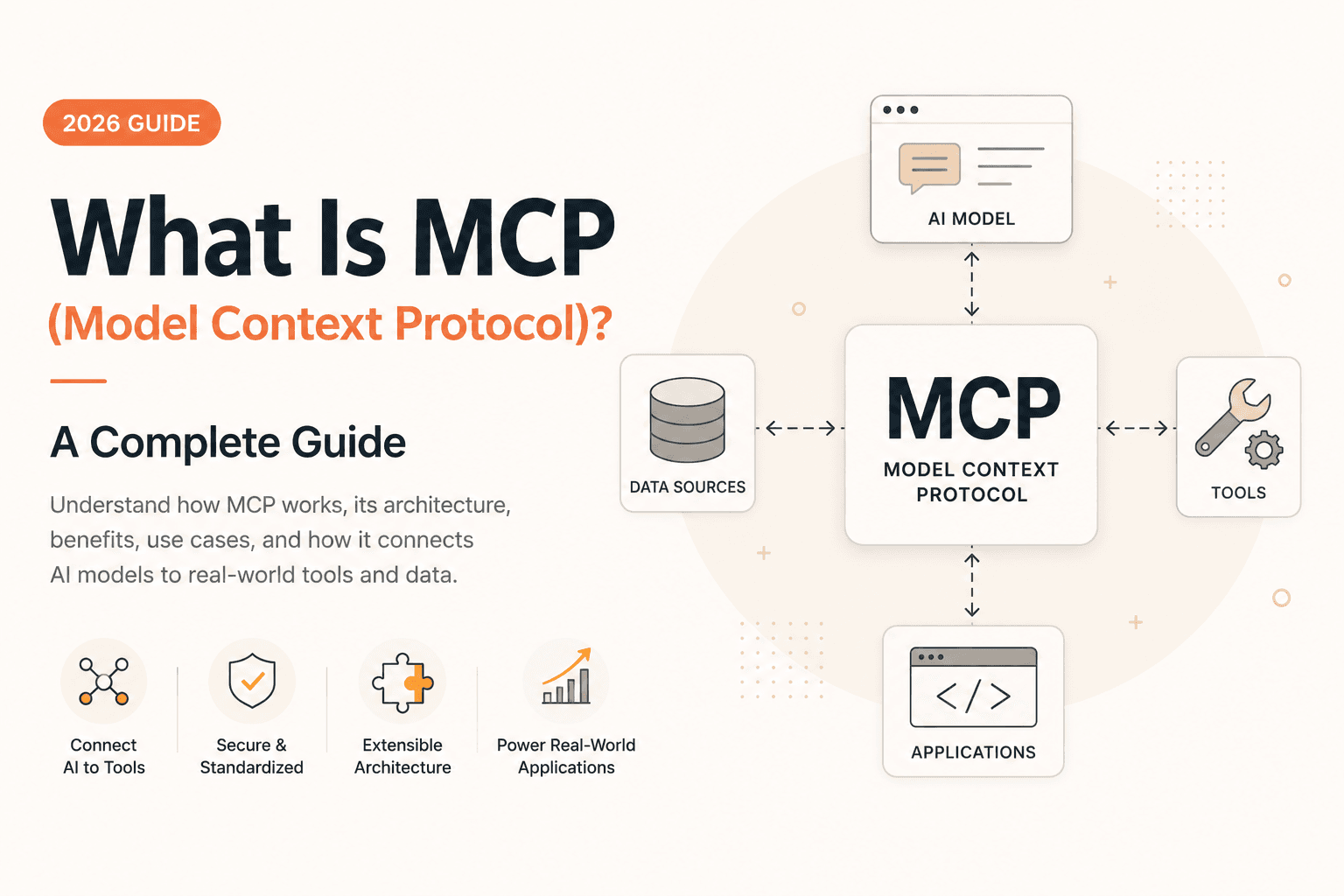
What Is MCP (Model Context Protocol)? A Complete Guide (2026)

OpenRouter API Tutorial: How to Connect & Fetch LLM Responses (JS/Node.js)
The Best AI Tools for Developers in 2026