Building Next-Generation Web Apps with React Server Components and AI Agents
Discover how the synergy between React Server Components and AI agents is redefining web development in 2026. Learn about architectural shifts, performance, and generative UI.
Building Next-Generation Web Apps with React Server Components and AI Agents
Published in 2026
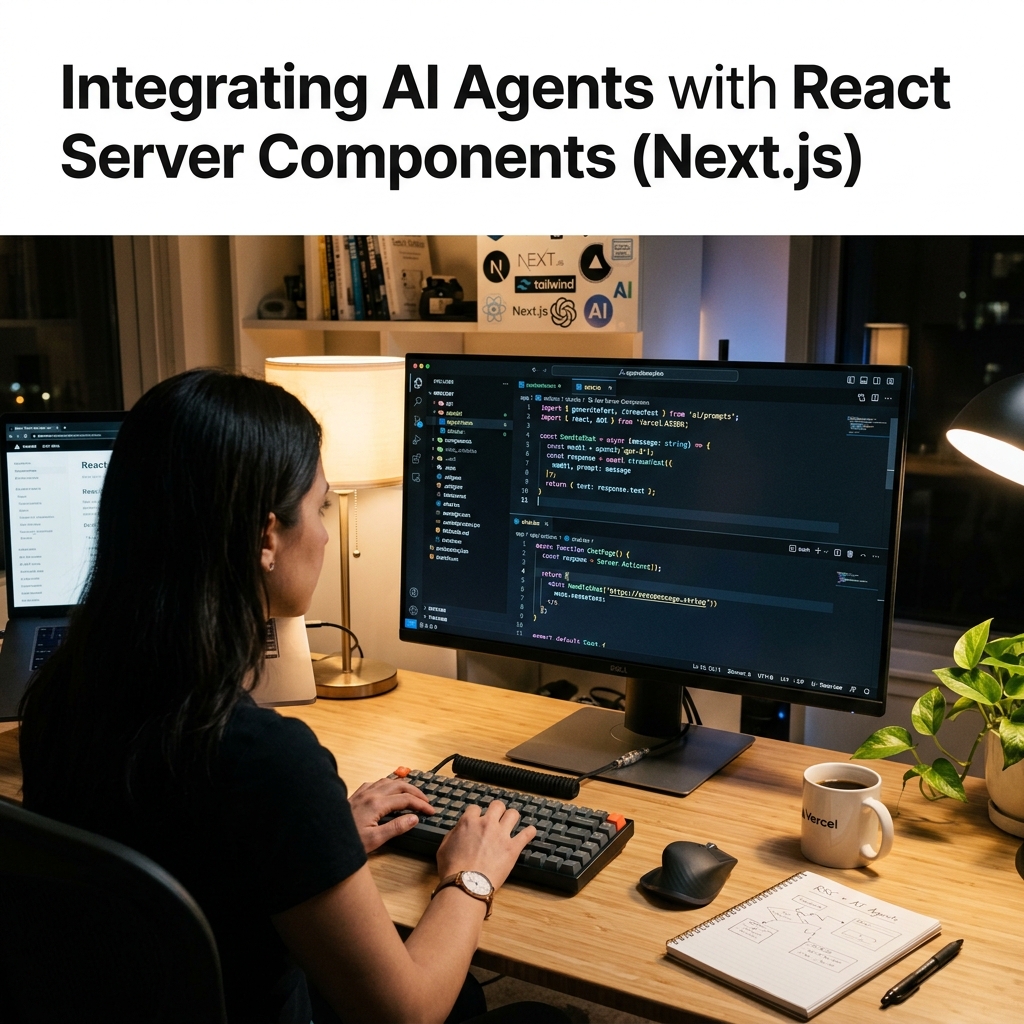
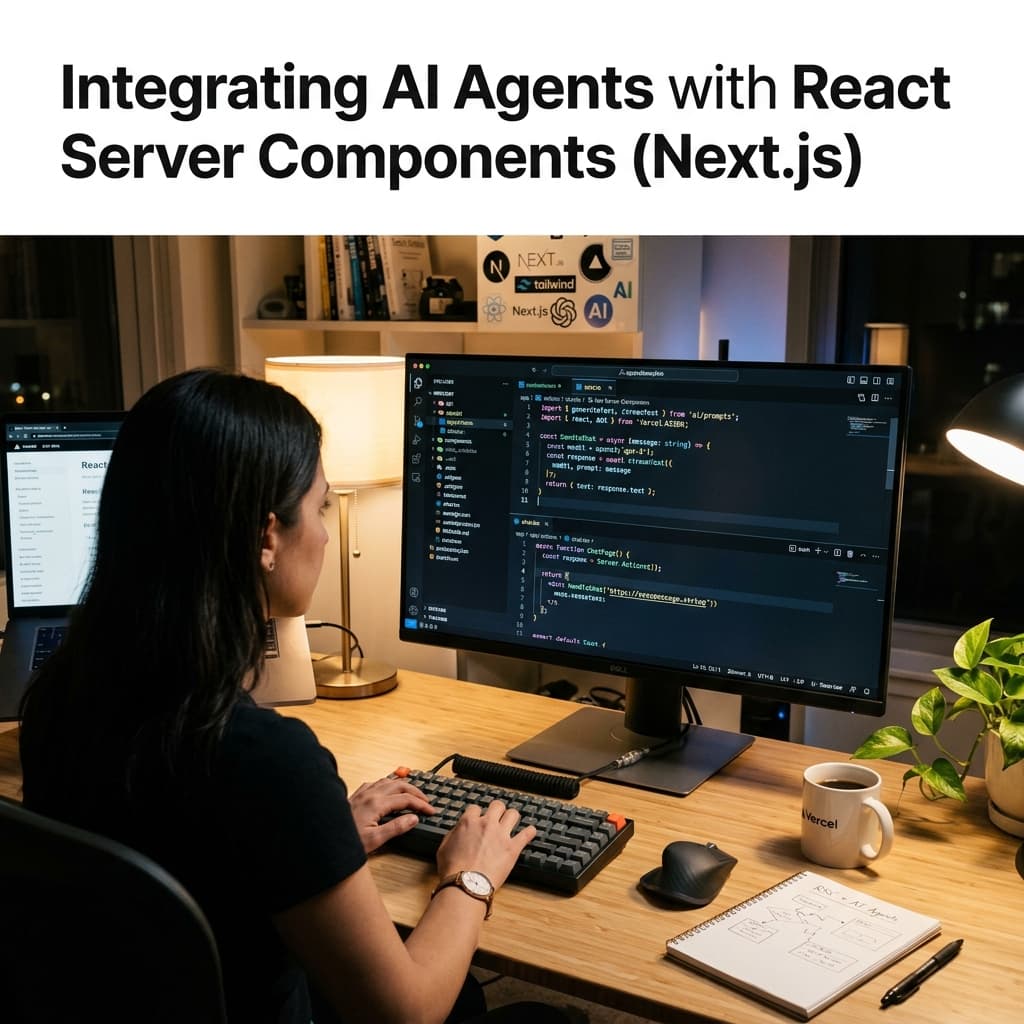
The web development landscape has undergone a monumental transformation over the past few years. As we navigate through 2026, the synergy between React Server Components (RSC) and Artificial Intelligence (AI) agents has established a new paradigm for building highly interactive, intelligent, and scalable web applications. Gone are the days when developers had to manually orchestrate complex state management across the client and server. Today, the integration of autonomous AI agents within the server component architecture allows for dynamic UI generation, real-time data processing, and highly personalized user experiences that were previously thought impossible.
In this comprehensive guide, we will explore the intricate relationship between React Server Components and AI agents. We will delve into the architectural shifts, the performance implications, and the best practices for leveraging this powerful combination. Whether you are a seasoned frontend engineer or a full-stack developer looking to future-proof your skills, understanding this paradigm is crucial for staying ahead in the rapidly evolving tech ecosystem.
Historically, React applications relied heavily on client-side rendering (CSR), which often led to bloated JavaScript bundles and sluggish performance, especially on mobile devices. The introduction of React Server Components fundamentally changed this by allowing components to be rendered entirely on the server, sending only HTML and minimal interactive JavaScript to the client. This shift not only drastically reduced bundle sizes but also improved load times and overall performance.
However, the true potential of RSC is only realized when combined with AI agents. These intelligent agents, powered by large language models (LLMs) and advanced machine learning algorithms, can act autonomously to fetch data, generate content, and even make decisions on the fly. By integrating AI agents into the server rendering process, developers can create applications that are not just fast, but incredibly smart and adaptive.
One of the most exciting applications of this synergy is Generative UI. Unlike static interfaces, Generative UI is dynamically created based on user interactions, preferences, and context. Imagine a dashboard that automatically reorganizes its layout, charts, and data based on the specific insights a user is looking for, without any pre-defined templates. This level of personalization is achieved by having AI agents analyze the user's intent and generate the corresponding React Server Components in real-time.
To implement Generative UI, developers leverage tools like the Vercel AI SDK, which provides seamless integration between AI models and React applications. The SDK allows developers to stream UI components directly from the server to the client as the AI generates them. This streaming architecture is essential for maintaining a responsive user experience, as it prevents the UI from blocking while waiting for complex AI computations to complete.
Performance optimization remains a critical aspect of this new paradigm. While RSCs reduce the client-side burden, rendering dynamic AI-driven content on the server requires efficient resource management. Caching strategies become paramount. AI responses and the resulting UI components must be intelligently cached to prevent redundant API calls and reduce latency. Strategies such as Stale-While-Revalidate (SWR) and fine-grained caching of individual server components ensure that the application remains blazing fast even under heavy loads.
Furthermore, edge computing plays a vital role in this architecture. By deploying AI agents and React Server Components to the edge, developers can process data and generate UI closer to the user, significantly reducing round-trip times. This geographically distributed approach is especially beneficial for global applications where latency can vary greatly depending on the user's location.
Security and authentication are also critical considerations when building AI-integrated applications. Since AI agents often need to interact with sensitive user data and backend systems, robust access controls are required. React Server Components provide a secure environment for handling authentication and authorization, as secrets and API keys are never exposed to the client. Developers must ensure that AI agents operate within strictly defined permissions and that all data exchanges are securely encrypted.
Looking ahead, the integration of AI agents and React Server Components will continue to evolve, opening up new possibilities for web development. We can expect to see even more sophisticated AI models that are specifically tailored for UI generation, as well as enhanced tooling that simplifies the development workflow. The shift towards agentic workflows, where AI acts as a collaborative partner rather than just a tool, will redefine the roles of software engineers and designers.
In conclusion, the combination of React Server Components and AI agents represents a significant leap forward in building next-generation web applications. By embracing this paradigm, developers can create interfaces that are not only performant and scalable but also deeply intelligent and personalized. As we move further into 2026, those who master these technologies will be at the forefront of the industry, shaping the future of human-computer interaction.
To fully grasp the implications, let us consider a deeper technical dive into the orchestration of state across these environments. In traditional React applications, state was predominantly a client-side concern. Context APIs, Redux, and Zustand ruled the roost. Now, with RSCs, state is bipartite. There is the persistent, shared state on the server—often managed by databases or in-memory stores—and the ephemeral, interactive state on the client. AI agents act as the bridge, dynamically hydrating the client state based on intelligent analysis of the server state. This necessitates a shift in mental models for developers.
Consider the scenario of a real-time collaborative document editor powered by AI. The server components handle the core structure and persistent storage, ensuring all users have a synchronized view. The AI agents operate on the server, analyzing the text in real-time, suggesting grammar improvements, or even generating new paragraphs based on user prompts. Because this generation happens on the server via RSCs, the client receives only the resulting HTML delta, ensuring the application remains lightweight despite the heavy lifting performed by the AI.
This architecture also profoundly impacts Search Engine Optimization (SEO). Historically, client-heavy SPAs struggled with SEO because web crawlers had to execute JavaScript to see the content. Server-Side Rendering (SSR) helped, but often led to a 'hydration waterfall'. React Server Components solve this elegantly by delivering fully rendered HTML directly. When AI agents are used to generate dynamic, personalized content, it ensures that this rich content is instantly accessible to search engine bots, significantly improving discoverability.
The developer experience (DX) is another area witnessing radical improvements. Tools like Next.js have embraced RSCs, providing an intuitive routing and rendering framework. When coupled with AI, the DX becomes almost magical. AI assistants integrated into the IDE can suggest optimal component structures, automatically write server-side data fetching logic, and even identify potential performance bottlenecks before the code is executed. This symbiotic relationship between developer and AI accelerates the development cycle exponentially.
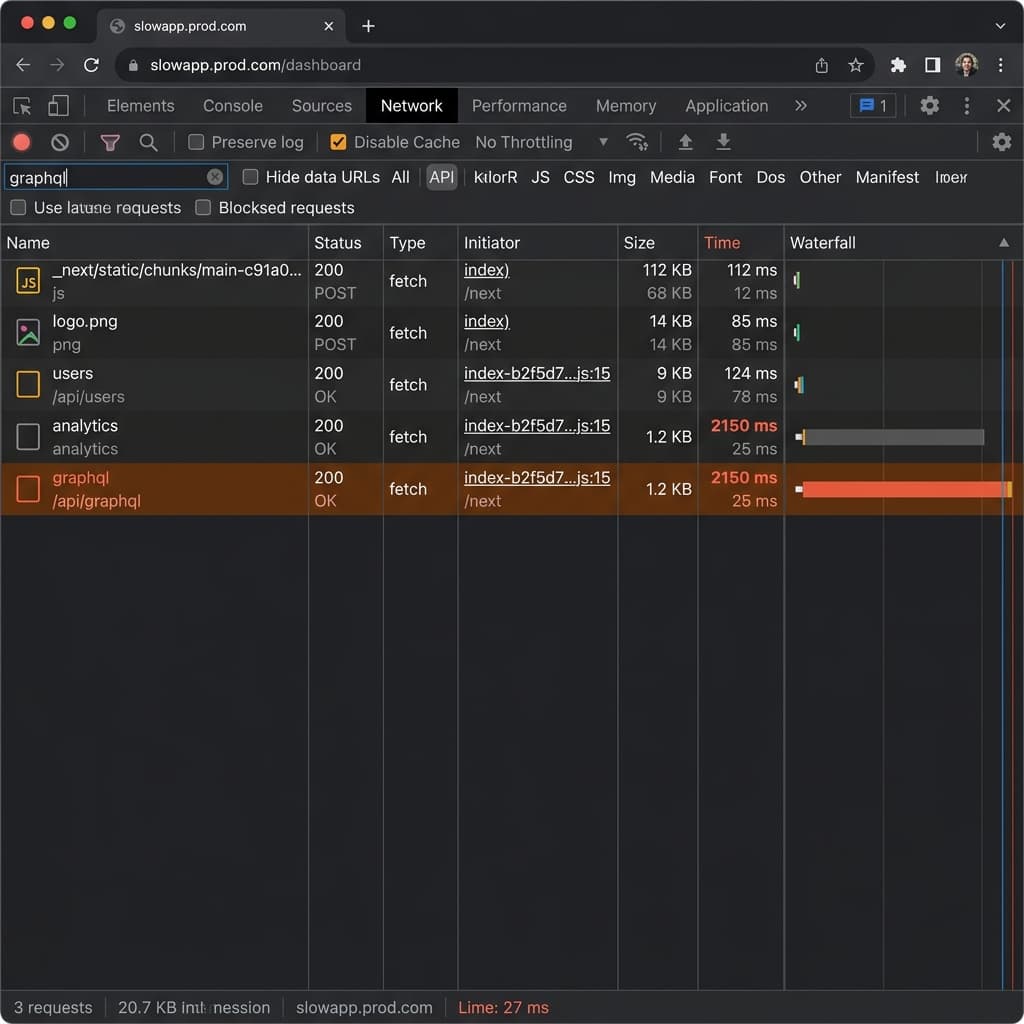
However, this new frontier is not without its challenges. Debugging distributed systems where logic is split between client, server, and autonomous agents can be complex. Traditional browser dev tools are insufficient for tracing AI decision-making processes on the server. The industry is responding with new monitoring and observability tools specifically designed for agentic workflows, providing insights into AI prompts, response times, and component rendering metrics.
Another challenge is ensuring the reliability and determinism of AI-generated UI. Large language models are inherently probabilistic, meaning they can sometimes produce unexpected or erroneous outputs. Establishing strict schema validation and fallback mechanisms is crucial. Developers must define robust boundaries for AI agents, ensuring that if an agent generates an invalid component structure, the application gracefully degrades rather than crashing.
The ethical implications of highly personalized, AI-driven applications also require careful consideration. As AI agents learn from user interactions to generate tailored UI, issues of privacy and data security become paramount. Developers must adhere to strict data protection regulations and ensure that user data is anonymized and handled responsibly. Transparency is key; users should be aware when they are interacting with AI-generated content and have control over their data preferences.
The intersection of accessibility and Generative UI presents another fascinating opportunity. AI agents can analyze the specific needs of a user—such as visual impairments or cognitive disabilities—and dynamically generate a UI that accommodates those needs. This could involve adjusting color contrast, enlarging typography, or simplifying complex navigation structures on the fly. By leveraging RSCs, these tailored interfaces can be delivered seamlessly, without requiring the user to manually configure settings.
As we look towards the horizon, the boundaries between the backend, frontend, and AI models are blurring. The concept of a 'full-stack' developer is evolving into an 'AI-stack' developer, someone who is proficient in orchestrating data flows between language models, server environments, and client interfaces. The React Server Component architecture is the ideal vehicle for this orchestration, providing the necessary separation of concerns while enabling tight integration.
The journey of web development is a continuous cycle of innovation. From static HTML pages to dynamic SPAs, and now to intelligent, agent-driven applications, each paradigm shift has unlocked new capabilities. The synergy between React Server Components and AI agents is perhaps the most profound shift yet, promising to redefine not just how we build software, but how we interact with digital environments. Embracing this shift requires continuous learning and a willingness to challenge established conventions, but the rewards—in terms of performance, user experience, and developer productivity—are truly transformative.
In summary, building next-generation web apps in 2026 is an exercise in orchestration. It’s about leveraging the power of React Server Components for optimal rendering performance, utilizing AI agents for dynamic intelligence, and seamlessly integrating these elements to create intuitive and adaptive user experiences. As the ecosystem matures and new tools emerge, this paradigm will only become more accessible and powerful, cementing its place as the standard for modern web development.
Deep Dive: Building the Architecture
The web development landscape has undergone a monumental transformation over the past few years. As we navigate through 2026, the synergy between React Server Components (RSC) and Artificial Intelligence (AI) agents has established a new paradigm for building highly interactive, intelligent, and scalable web applications. Gone are the days when developers had to manually orchestrate complex state management across the client and server. Today, the integration of autonomous AI agents within the server component architecture allows for dynamic UI generation, real-time data processing, and highly personalized user experiences that were previously thought impossible.
In this comprehensive guide, we will explore the intricate relationship between React Server Components and AI agents. We will delve into the architectural shifts, the performance implications, and the best practices for leveraging this powerful combination. Whether you are a seasoned frontend engineer or a full-stack developer looking to future-proof your skills, understanding this paradigm is crucial for staying ahead in the rapidly evolving tech ecosystem.
Historically, React applications relied heavily on client-side rendering (CSR), which often led to bloated JavaScript bundles and sluggish performance, especially on mobile devices. The introduction of React Server Components fundamentally changed this by allowing components to be rendered entirely on the server, sending only HTML and minimal interactive JavaScript to the client. This shift not only drastically reduced bundle sizes but also improved load times and overall performance.
However, the true potential of RSC is only realized when combined with AI agents. These intelligent agents, powered by large language models (LLMs) and advanced machine learning algorithms, can act autonomously to fetch data, generate content, and even make decisions on the fly. By integrating AI agents into the server rendering process, developers can create applications that are not just fast, but incredibly smart and adaptive.
One of the most exciting applications of this synergy is Generative UI. Unlike static interfaces, Generative UI is dynamically created based on user interactions, preferences, and context. Imagine a dashboard that automatically reorganizes its layout, charts, and data based on the specific insights a user is looking for, without any pre-defined templates. This level of personalization is achieved by having AI agents analyze the user's intent and generate the corresponding React Server Components in real-time.
To implement Generative UI, developers leverage tools like the Vercel AI SDK, which provides seamless integration between AI models and React applications. The SDK allows developers to stream UI components directly from the server to the client as the AI generates them. This streaming architecture is essential for maintaining a responsive user experience, as it prevents the UI from blocking while waiting for complex AI computations to complete.
Performance optimization remains a critical aspect of this new paradigm. While RSCs reduce the client-side burden, rendering dynamic AI-driven content on the server requires efficient resource management. Caching strategies become paramount. AI responses and the resulting UI components must be intelligently cached to prevent redundant API calls and reduce latency. Strategies such as Stale-While-Revalidate (SWR) and fine-grained caching of individual server components ensure that the application remains blazing fast even under heavy loads.
Furthermore, edge computing plays a vital role in this architecture. By deploying AI agents and React Server Components to the edge, developers can process data and generate UI closer to the user, significantly reducing round-trip times. This geographically distributed approach is especially beneficial for global applications where latency can vary greatly depending on the user's location.
Security and authentication are also critical considerations when building AI-integrated applications. Since AI agents often need to interact with sensitive user data and backend systems, robust access controls are required. React Server Components provide a secure environment for handling authentication and authorization, as secrets and API keys are never exposed to the client. Developers must ensure that AI agents operate within strictly defined permissions and that all data exchanges are securely encrypted.
Looking ahead, the integration of AI agents and React Server Components will continue to evolve, opening up new possibilities for web development. We can expect to see even more sophisticated AI models that are specifically tailored for UI generation, as well as enhanced tooling that simplifies the development workflow. The shift towards agentic workflows, where AI acts as a collaborative partner rather than just a tool, will redefine the roles of software engineers and designers.
Related
Resources
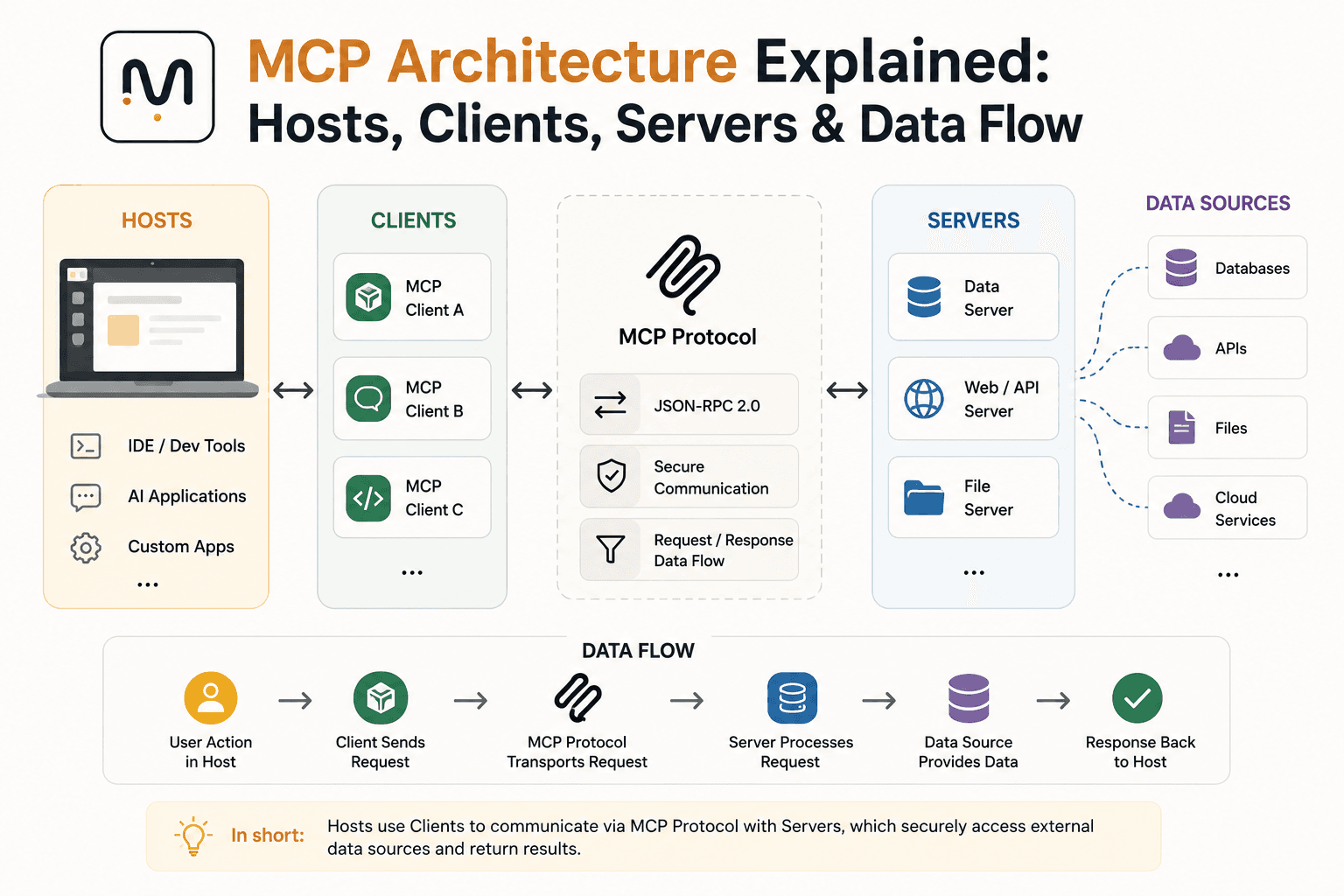
MCP Architecture Explained: Hosts, Clients, Servers & Data Flow
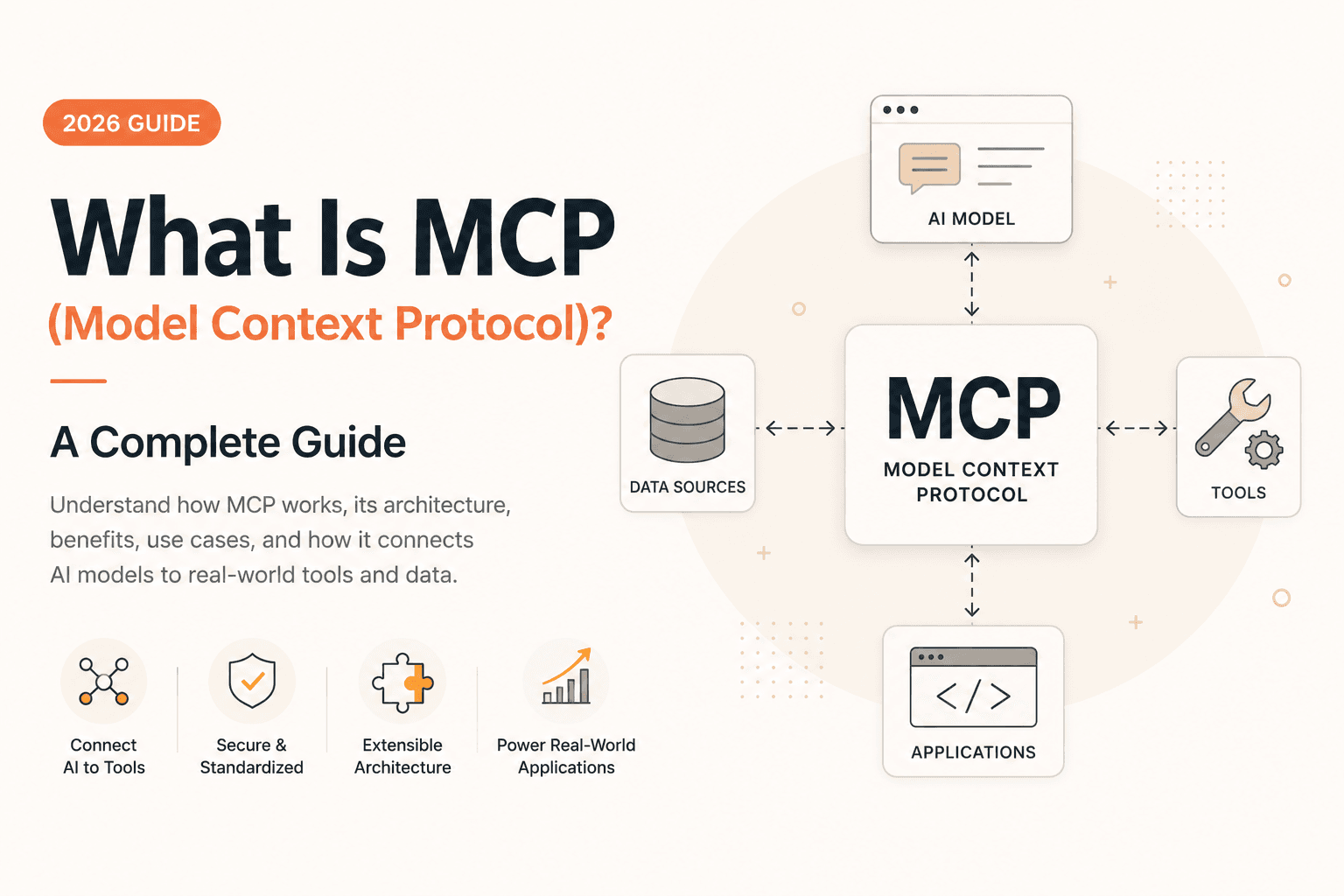
What Is MCP (Model Context Protocol)? A Complete Guide (2026)

OpenRouter API Tutorial: How to Connect & Fetch LLM Responses (JS/Node.js)
The Best AI Tools for Developers in 2026