Best AI Prompts & Prompt Libraries in 2026 (10 Free & Paid Websites)
Explore the best ai prompts and prompt libraries in 2026 — free & paid sources for ChatGPT, Midjourney, and Stable Diffusion, including FlowGPT, PromptHero, Civitai, and Learn Prompting.
10 Best AI Prompt Libraries & Websites in 2026: Free Tools & Guides
No matter how capable a model becomes, the quality of the output still comes down to one thing: the prompt. Well-written ai prompts — ones that specify context, format, and intent — tend to produce a usable result on the first try. Vague or underspecified ones almost always produce something generic that needs several rounds of rework.
That's why an ai prompt library — a curated, ready-made collection of prompts — is worth bookmarking before you start typing from scratch. Communities of practitioners have spent the last few years testing, refining, and sharing prompts across use cases — content writing, coding, image generation, data analysis — so that anyone starting out doesn't have to reinvent the wheel. Below are the 10 AI prompt libraries and websites we return to most often, evaluated for community size, how current their content stays, and how easy it is to adapt what you find to your own workflow. Every price, launch date, and user figure below is pulled from each platform's own pricing page or public company profile (Crunchbase, PitchBook, Wikipedia) rather than copied from other roundups — with figures current as of August 2026 unless noted.
If you're looking specifically for ChatGPT-focused, no-cost options, we've broken those out separately in 6 Best Free Prompt Libraries for ChatGPT in 2026 — this guide covers the broader landscape of ai prompts across text and image models.
Quick Comparison
| Website | Best For | Founded | Pricing |
|---|---|---|---|
| FlowGPT | Overall / multi-model prompts | 2023 | Free |
| PromptHero | AI image prompts | 2022 | Free; paid plans from ~$19/mo |
| Lexica | Searching AI-generated images by prompt | 2022 | Free (100 gens/mo); paid from ~$10/mo |
| Civitai | Stable Diffusion models & prompts | 2022 | Free; optional paid content/tips |
| OpenArt | Themed image prompt libraries | 2022 | Free; paid plans ~$7–$240/mo |
| Awesome ChatGPT Prompts | Free role-based prompts | 2022 | Free |
| Learn Prompting | Learning prompt engineering | — | Free; paid Plus tier for certification |
| PromptBase | Buying/selling professional prompts | 2022 | $1.99–$9.99 per prompt |
| AIPRM | Marketing & SEO prompts | 2022 | Free; paid plans ~$20–$999/mo |
| Snack Prompt | Discovering community-ranked prompts | 2023 | Free; premium prompts available |
Types of AI Prompt Resources
Not every site on this list solves the same problem. Before picking one, it helps to know which category you actually need:
- Prompt libraries — curated collections of ready-to-use prompts, usually organized by task or topic (e.g., FlowGPT, AIPRM).
- Image prompt websites — repositories built around image models, pairing each prompt with the image it produced (e.g., PromptHero, Lexica, Civitai, OpenArt).
- Prompt engineering guides — resources that teach the underlying skill of writing prompts rather than handing over templates (e.g., Learn Prompting).
- Marketplaces — sites where professionally crafted prompts are bought and sold (e.g., PromptBase).
- Community repositories — open, crowdsourced collections maintained and ranked by users (e.g., Awesome ChatGPT Prompts, Snack Prompt).
1. FlowGPT — Best Overall
FlowGPT, founded in San Francisco in January 2023, is typically the first stop for ai prompts that work across ChatGPT, Claude, Gemini, and most other large language models. It's structured like a social platform built around prompts: users publish what they've used, attach sample outputs, and the community upvotes and comments on what actually works. The platform reported over 4 million monthly active users in early 2024, shortly after raising a $10 million funding round led by Goodwater Capital, and its library spans coding, studying, marketing, content writing, translation, and data analysis.
Because the prompts are peer-tested rather than static, most require little to no editing before they're usable in a real workflow, and the entire library is free to browse. If your focus is specifically ChatGPT image prompts, our dedicated guide to ChatGPT image generation prompts goes deeper than FlowGPT's general library.
2. PromptHero — Best for AI Image Prompts
PromptHero, founded in San Francisco in 2022, is one of the most established repositories of ai prompts for generative image models, indexing prompts for Midjourney, Stable Diffusion, FLUX, and DALL-E. Each prompt is paired with the image it produced, making it straightforward to reverse-engineer how a specific look was achieved — exactly why it's a go-to for anyone learning to write image prompts for cinematic photography, anime, portraiture, or concept art.
PromptHero functions as a practical reference library rather than just a gallery. Browsing is free, with paid plans starting around $19/month (a Pro tier runs about $24/month billed annually) for extra generation credits and profile features. For a ready-to-use example rather than browsing from scratch, our guide to a ChatGPT professional photo shoot prompt walks through one end to end.
3. Lexica — Best for AI Image Prompt Search
Lexica launched in San Francisco in 2022, raising $5 million in seed funding that same year. It works like a search engine purpose-built for AI imagery, indexing more than 10 million Stable Diffusion images. Search by keyword, browse the matching results, and copy the underlying prompt in a single click — its main advantage is speed of iteration, since searching for how others have described a similar concept is often the fastest way to find fresh ai prompts and get unstuck when an idea stalls.
Searching Lexica is free, and the free tier includes up to 100 image generations a month; generating more directly through the platform requires a paid plan starting around $10/month.
4. Civitai — Best for Stable Diffusion Models & Prompts
Civitai, founded in Boise, Idaho in November 2022 by Justin Maier and Maxfield Hulker, is best known as a repository for Stable Diffusion models, LoRAs, and checkpoints, but it also stores the exact prompt tied to each published image. The platform grew fast, reporting more than 200,000 hosted models and over 10 million users by mid-2024, backed by $5.1 million in seed funding from Andreessen Horowitz. That combination of model, prompt, and result makes it one of the most reliable places to learn how structure and model choice interact to produce consistent output.
Browsing Civitai is free, with optional paid content and tips available through the site's in-house currency. If you want to go a step further than prompting and actually fine-tune a model on your own images, our guide to training AI models with prompts is a natural next step after Civitai.
5. OpenArt — Best for Themed Image Prompt Libraries
OpenArt, founded in 2022 by a team of former Google engineers, combines image generation with a curated library of ai prompts for Midjourney, Stable Diffusion, DALL-E, and other image models, organized by theme — fantasy, cyberpunk, architecture, fashion, photography, and more. Every image is published with its prompt and the model used, which shortens the learning curve for anyone studying other people's technique.
Pricing runs from a free tier up to roughly $240/month for the top-tier plan, with mid-range paid tiers starting around $7/month on annual billing. If you specifically work with Google's model, our Gemini AI photo prompt guide pairs well with OpenArt's theme-based browsing.
6. Awesome ChatGPT Prompts — Best Free Role-Based Prompt Repository
Awesome ChatGPT Prompts has become a standard reference in the prompt engineering community since it was first published in December 2022 — often cited as the original prompt library of its kind. It has since passed 143,000 GitHub stars, been featured in Forbes, and been cited in more than 40 academic papers from institutions including Harvard and Columbia. It organizes ai prompts by role — Software Engineer, UX Designer, Product Manager, Teacher, Copywriter, Data Analyst, and dozens more — maintained entirely through community contributions, built primarily for ChatGPT but easy to adapt for Claude and Gemini.
It's completely free and one of the easiest ways to see how role-based prompting is structured in practice without paying for anything.
7. Learn Prompting — Best for Learning Prompt Engineering
Learn Prompting, founded by AI researcher Sander Schulhoff, has reportedly taught over 1 million people how to write effective prompts, with guides cited by both OpenAI and Google. Unlike the libraries above, it teaches the underlying skill of writing ai prompts rather than handing over ready-made templates, covering core, model-agnostic techniques — zero-shot prompting, few-shot prompting, chain-of-thought prompting, ReAct, prompt injection as a security concept, and prompt chaining — across more than 60 free modules translated into 9 languages.
The core guides are free, with a paid Learn Prompting Plus subscription unlocking a 15-course library and certificates for anyone who wants to formalize the skill.
8. PromptBase — Best Prompt Marketplace
PromptBase launched in London in the summer of 2022, founded by Ben Stokes, as one of the first marketplaces to treat prompts as a sellable product. Prompts for Midjourney, DALL-E, Stable Diffusion, ChatGPT, and Claude typically sell for $1.99 to $9.99 each, with sellers keeping around 80% of each sale. Most listings are optimized for specialized, commercial use cases — logo design, advertising, and production-grade image generation.
It's not the ideal starting point if you're new to prompting, but studying how top-selling prompts are structured is a useful exercise in understanding what separates a professional-grade prompt from a casual one.
9. AIPRM — Best for Marketing & SEO Prompts
AIPRM, founded in 2022 by longtime SEO professional Christoph Cemper, has been installed by more than 2 million users as a ChatGPT browser extension backed by a library of over 4,500 ai prompts aimed at marketing tasks — SEO, content marketing, keyword research, email copy, and business planning. For anyone whose work touches marketing or SEO regularly, it's worth testing as a way to speed up repetitive prompt-writing without leaving ChatGPT.
There's a free tier to get started, with paid plans ranging from roughly $20/month up to $999/month for the top individual tier aimed at heavy daily use.
10. Snack Prompt — Best for Discovering Community-Ranked Prompts
Snack Prompt, founded in Dallas in 2023 by Eder Teixeira and acquired by Spectral Capital in October 2025, is a community-driven platform for discovering, upvoting, and sharing ai prompts for ChatGPT and Gemini. Its library has grown to more than 220,000 community-submitted prompts, with a ranking system driven by its user base surfacing the most effective ones, plus a companion Chrome extension that brings the library directly into your ChatGPT window.
Browsing is free, with premium prompts and Pro features available for heavier use.
How to Choose an AI Prompt Website
With ten legitimate options above, the right pick depends less on which site is "best" and more on how it fits your workflow. Weigh these factors:
- Community activity — an active site means prompts get tested and refined continuously, not left stale after launch.
- How current the content stays — prompts written for an older model generation sometimes need adjusting for newer ones.
- Ease of adaptation — the best library entries need minimal editing to work for your specific task.
- Model coverage — some sites are built for one model family (Stable Diffusion, ChatGPT); others are model-agnostic.
- Free vs. paid — free libraries cover most casual and learning needs; paid marketplaces make more sense for commercial, production-grade work.
- Format — do you want a ready-made template (a library), or do you want to learn the underlying skill (a guide like Learn Prompting)?
Where Should You Start?
| Your Goal | Start Here |
|---|---|
| Prompts for ChatGPT | FlowGPT or free ChatGPT prompt libraries |
| Generate images | PromptHero or Civitai |
| Learn to write ai prompts from first principles | Learn Prompting |
| Free, role-based reference prompts | Awesome ChatGPT Prompts |
| Professional, commercial-grade ai prompts | PromptBase |
| Quick, community-ranked prompts with no setup | Snack Prompt |
No single library has the "perfect" prompt for every situation. The strongest ai prompts are almost always the product of iteration — start from a library entry, test it against your own use case, and refine from there.
Best AI Prompt Websites by Use Case
- ChatGPT — FlowGPT, Awesome ChatGPT Prompts, and Snack Prompt all cover general ChatGPT use well; for image-specific ChatGPT work, see our ChatGPT image generation prompts guide.
- Coding — Awesome ChatGPT Prompts includes role-based developer prompts (Software Engineer, Code Reviewer), though coding prompts are increasingly built directly into IDEs and coding agents rather than standalone libraries.
- Marketing — AIPRM is purpose-built for marketing and content workflows.
- SEO — AIPRM again is the strongest fit here, with dedicated SEO and keyword-research prompt categories.
- Image generation — PromptHero, Civitai, Lexica, and OpenArt each specialize here; for platform-specific examples, see our guides to ChatGPT professional photo shoot prompts and Gemini AI photo prompts.
- Learning — Learn Prompting is the clear choice for understanding technique rather than copying templates.
FAQ
What are ai prompts? Ai prompts are the instructions you give a model — like ChatGPT, Claude, Midjourney, or Stable Diffusion — to tell it what to produce. A prompt can be a simple question or a detailed brief that specifies role, format, tone, and desired output. The more precise the prompt, the more predictable and usable the result.
Where can I find free ai prompts? FlowGPT, Awesome ChatGPT Prompts, Snack Prompt, Lexica, and Learn Prompting are all free. FlowGPT, Awesome ChatGPT Prompts, and Snack Prompt are best for text-based prompts, while Lexica is geared toward finding image prompts already tied to a generated result.
Does Anthropic have its own prompt library? Not a public, browsable library in the way FlowGPT or PromptHero offer one. Instead, Anthropic's Console includes a built-in prompt generator and a separate prompt improver that build and refine prompt templates for you, based on Anthropic's own documented prompt-engineering techniques — aimed at developers working with the Claude API rather than casual browsing, and it requires a free Console account. For ready-made prompts that work well with Claude specifically, Learn Prompting and Awesome ChatGPT Prompts are reasonable substitutes, since most of their role-based and technique-based prompts adapt directly.
Are paid ai prompt libraries worth it? For casual or personal use, free libraries usually cover most needs. Paid marketplaces like PromptBase — where prompts typically sell for $1.99 to $9.99 each — are more useful for commercial, production-grade work, such as branded image generation or advertising, where a proven prompt saves significant iteration time.
Do the same ai prompts work across different models? Not always. A prompt tuned for ChatGPT may need adjusting for Claude or Gemini, and image prompts built for Midjourney often behave differently on Stable Diffusion or FLUX because each model interprets phrasing, weighting, and structure differently. Treat library prompts as a starting point, not a final answer.
How do I write better ai prompts myself? Start by studying prompts that already work — libraries like PromptHero and Civitai pair prompts with their actual output, which makes it easy to see cause and effect. For a deeper, technique-first foundation, Learn Prompting covers methods like few-shot prompting and chain-of-thought prompting that apply across most models.
What's the best AI prompt website for coding? No site on this list is purely coding-focused — Awesome ChatGPT Prompts includes several developer-role prompts, but most coding prompt patterns today live inside IDEs and coding agents rather than standalone libraries.
Is prompt engineering still a useful skill in 2026? Yes. As models improve, the gap between a vague prompt and a well-structured one still shows up clearly in output quality, especially for specialized or production use cases. Learning to write strong ai prompts remains one of the highest-leverage skills for working with AI tools.
Final Thoughts
Prompt writing has moved from being a minor skill to a genuine competency for working effectively with AI systems. Studying how experienced users structure their ai prompts, and testing the same idea across multiple models, is one of the fastest ways to improve your own results.
For long-term use, FlowGPT, PromptHero, Civitai, Learn Prompting, and Snack Prompt stand out for having active communities, frequently updated content, and a low barrier to entry for both beginners and experienced users building a personal collection of ai prompts.
Related
Resources
ChatGPT Professional Photo Prompt: 15 Studio-Quality Templates (2026)
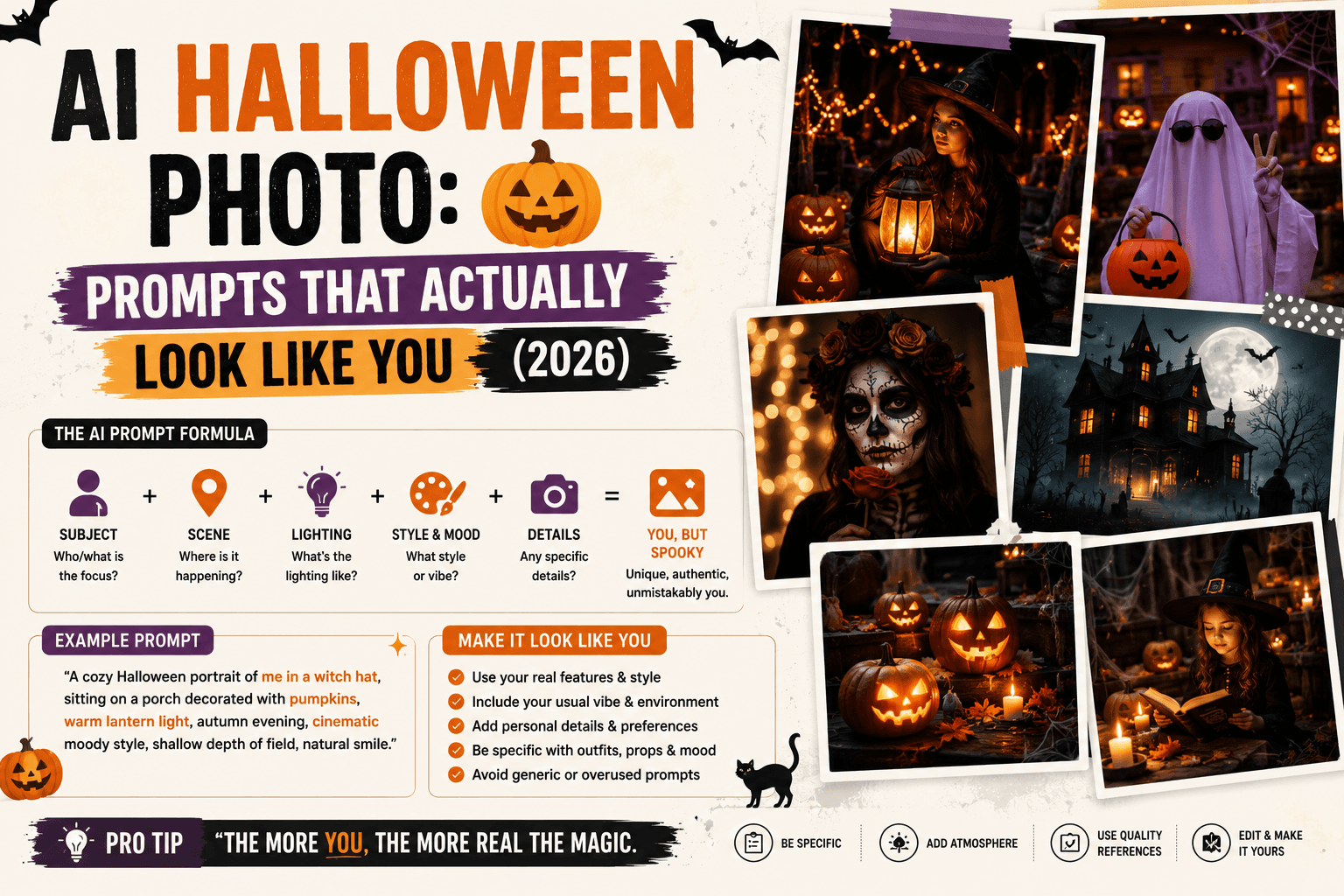
AI Halloween Photo: Prompts That Actually Look Like You (2026)
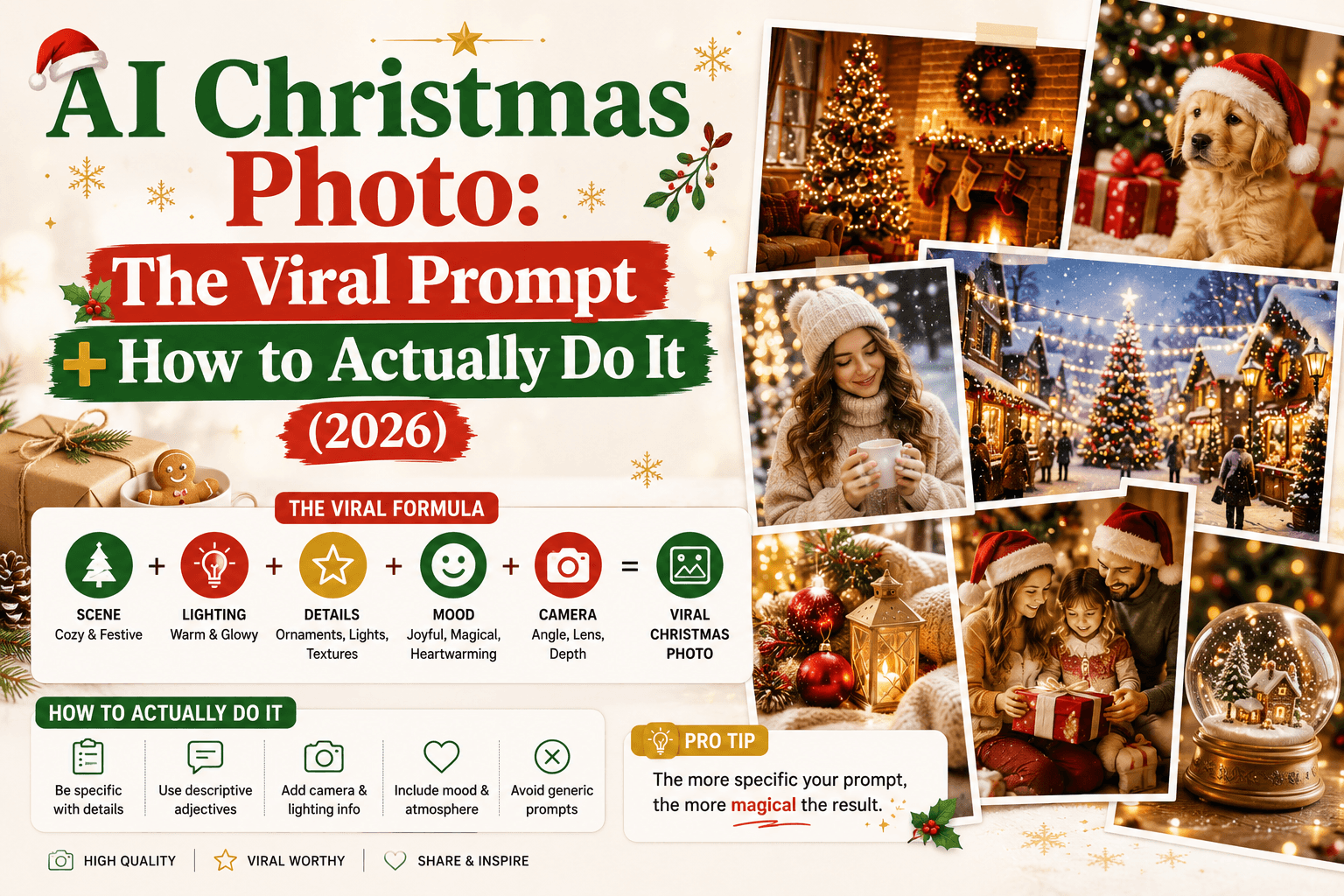
AI Christmas Photo: The Viral Prompt + How to Actually Do It (2026)
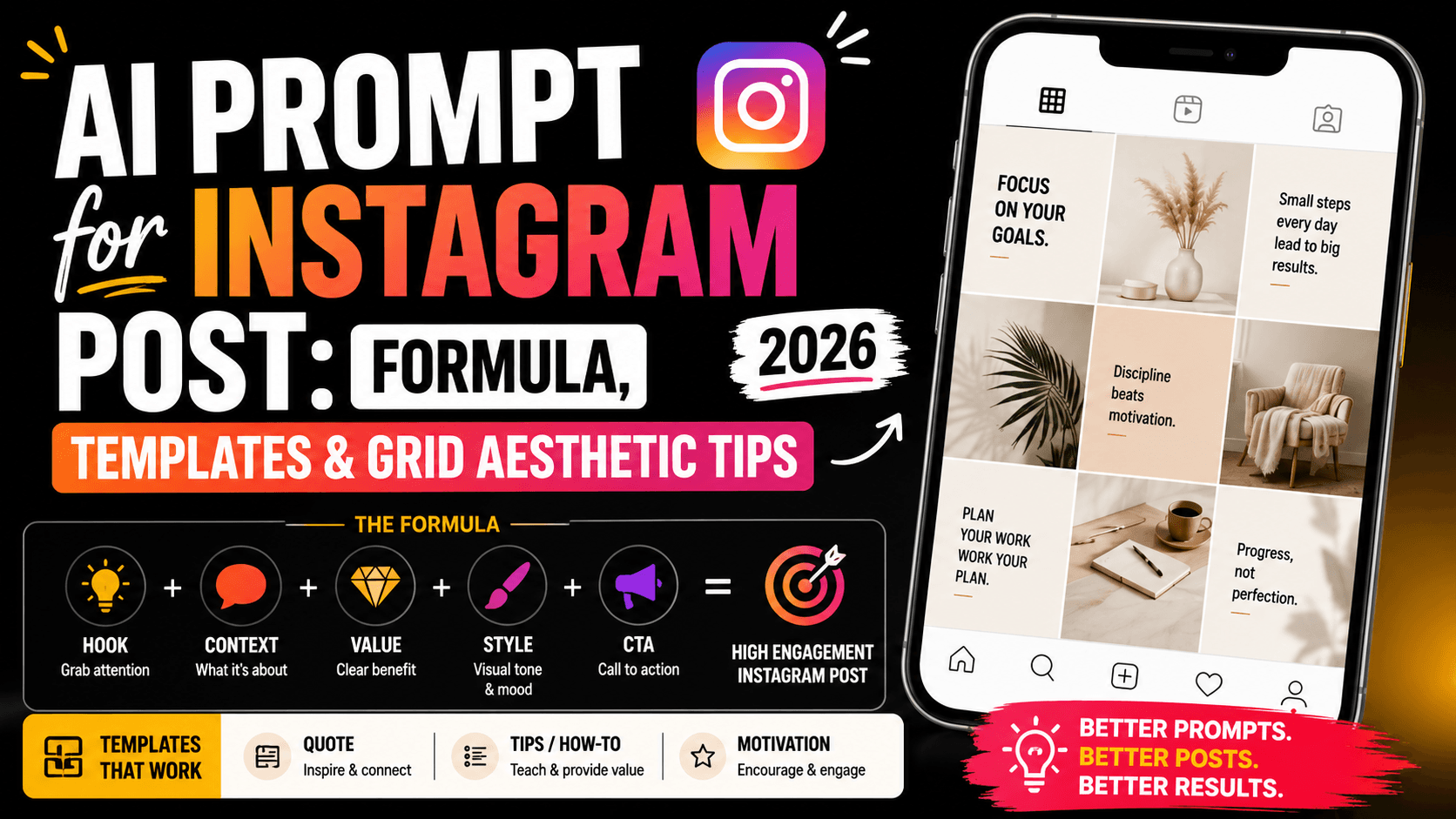
AI Prompt for Instagram Post: Formula + Templates (2026)